International Day for the Elimination of Trafficking in Persons 2026
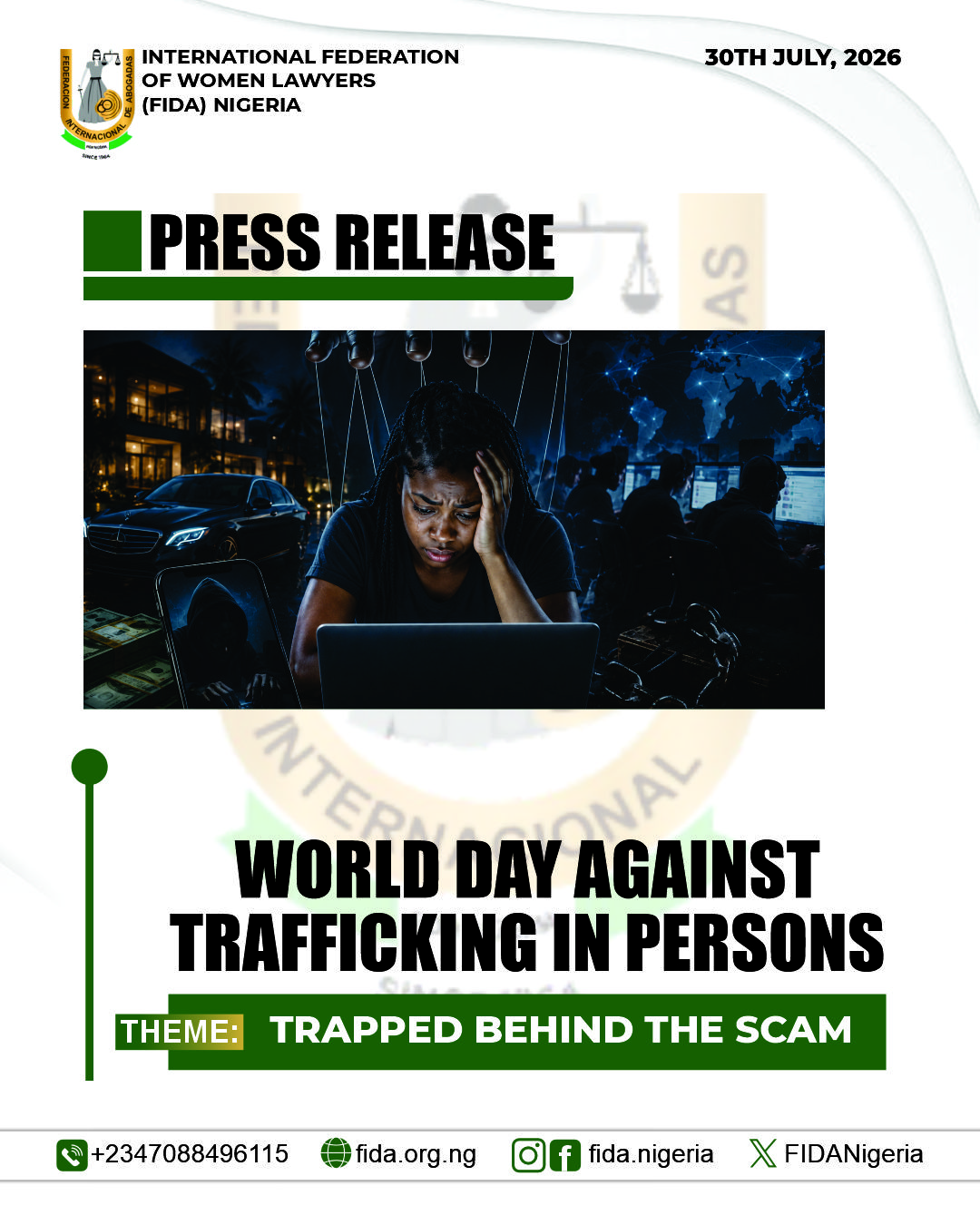
Trapped Behind the Scam: FIDA Nigeria Calls for Better Protection for Victims of Human Trafficking
The face of Human Trafficking is changing. Today, many traffickers no longer rely only on physical movement or false promises of work. Instead, they use the internet, social media, and online platforms to trap people through fake job offers, fake business opportunities, scholarship promises, romance scams, and false travel arrangements.
This year’s theme, “Trapped Behind the Scam,” shines a light on a growing problem. Many victims are tricked into taking part in online financial crimes against their will. From the outside, they may look like criminals, but in reality, they are victims who have been deceived, threatened, and forced into these activities.
At FIDA Nigeria, we believe this entrapment is not only a serious human rights abuse, but also a threat to justice. People who are forced into crime should be recognised as victims, while those who recruit, control, and profit from them should be held responsible.
Around the world, criminal groups are using technology to target vulnerable people. They lure victims with fake employment, investment opportunities, scholarship offers, romantic relationships, or promises of a better life abroad.
Once victims are trapped, they may be forced into money laundering, or to run online scams, move stolen money, create fake financial accounts, steal personal information, or recruit other victims. Many are threatened, abused, watched constantly, have their identity documents taken away, or are trapped by debts they can never repay.
Too often, when the authorities step in, these victims are arrested and treated like criminals instead of being identified as people who were forced into these acts.
Nigeria has laws that make human trafficking a crime and provide protection and support for victims. These laws are meant to ensure that traffickers are investigated and punished while survivors receive the help they need to recover and rebuild their lives.
FIDA Nigeria believes one principle must always guide the response: cases of people who unknowingly were forced into criminal activities because they were trafficked should be properly investigated before any form of punishment is meted out for such actions. Most victims should not be prosecuted, but rather, should be shielded and protected. Because the real criminals are the people who planned, organised, and fully benefited from the exploitation.
This form of trafficking is becoming more complex. It is closely linked to cybercrime, financial fraud, identity theft, corruption, and organised crime. Criminal groups continue to adapt by using new technologies while taking advantage of poverty, unemployment, conflict, displacement, and people’s hopes for better opportunities.
Women and girls remain especially at risk. Many are forced to operate fake online accounts, help move stolen money, take part in investment scams, or recruit other victims after being threatened with harm to themselves or their families.
Children and young people are also increasingly being targeted through social media and online platforms that appear genuine and trustworthy.
Every person deserves to be treated with dignity. Human trafficking strips people of that dignity by turning them into tools for making money through crime. Protecting victims and bringing traffickers to justice is both a legal duty and a moral responsibility.
FIDA Nigeria is calling for stronger action to ensure victims are identified early and treated with care throughout the justice process. Police officers, investigators, prosecutors, and judges need better training to recognise when someone involved in cybercrime or financial fraud may actually be a victim of trafficking.
Investigations should focus on breaking up the criminal networks behind these crimes instead of concentrating only on those who were forced to carry them out.
We also call for closer cooperation among agencies such as NAPTIP, the Nigeria Police Force, the EFCC, the Nigeria Immigration Service, the courts, prosecutors, and financial intelligence agencies. Because these crimes often cross national borders, countries must work together to share information, trace illegal money, recover stolen assets, and bring traffickers to justice.
Survivors need more than rescue. They should have access to legal support, counselling, protection, compensation, rehabilitation, and opportunities to rebuild their lives safely and with dignity.
For many years, FIDA Nigeria has worked to protect the rights of women, children, and other vulnerable people through free legal services, advocacy, public education, and law reform. We remain committed to working with government agencies, civil society organisations, the legal profession, and international partners to strengthen justice and ensure survivors receive the protection and support they deserve.
Human traffickers continue to change the way they operate. Nigeria’s response must change even faster.
People who are forced into criminal activities deserve protection—not punishment. Those who deceive, exploit, threaten, and profit from human trafficking must face the full force of the law.
FIDA Nigeria will continue to advocate for stronger laws, better partnerships, and a justice system that puts survivors first until this becomes a reality.
Signed
FIDA Nigeria
30 July 2026

FIDA
Latest Posts
 by FIDA
PROTECTING THE GIRL, PROTECTING HER FUTURE: NIGERIA MUST END CHILD MARRIAGE AND INVEST IN GIRLS’ RIGHTS
A girl should have a say in who she becomes, what she wants to achieve and the life she wants to build. Her childhood should not be used to decide her...
by FIDAWHEN CUSTODY BECOMES A DEATH SENTENCE, THE STATE MUST ANSWER
FIDA Nigeria Demands Answers Over the Deaths of 37 People in NSCDC Custody in Minna, Including Children There is a point at which a security operation...

